
How Outsourcing Customer Service Can Reduce Business Costs
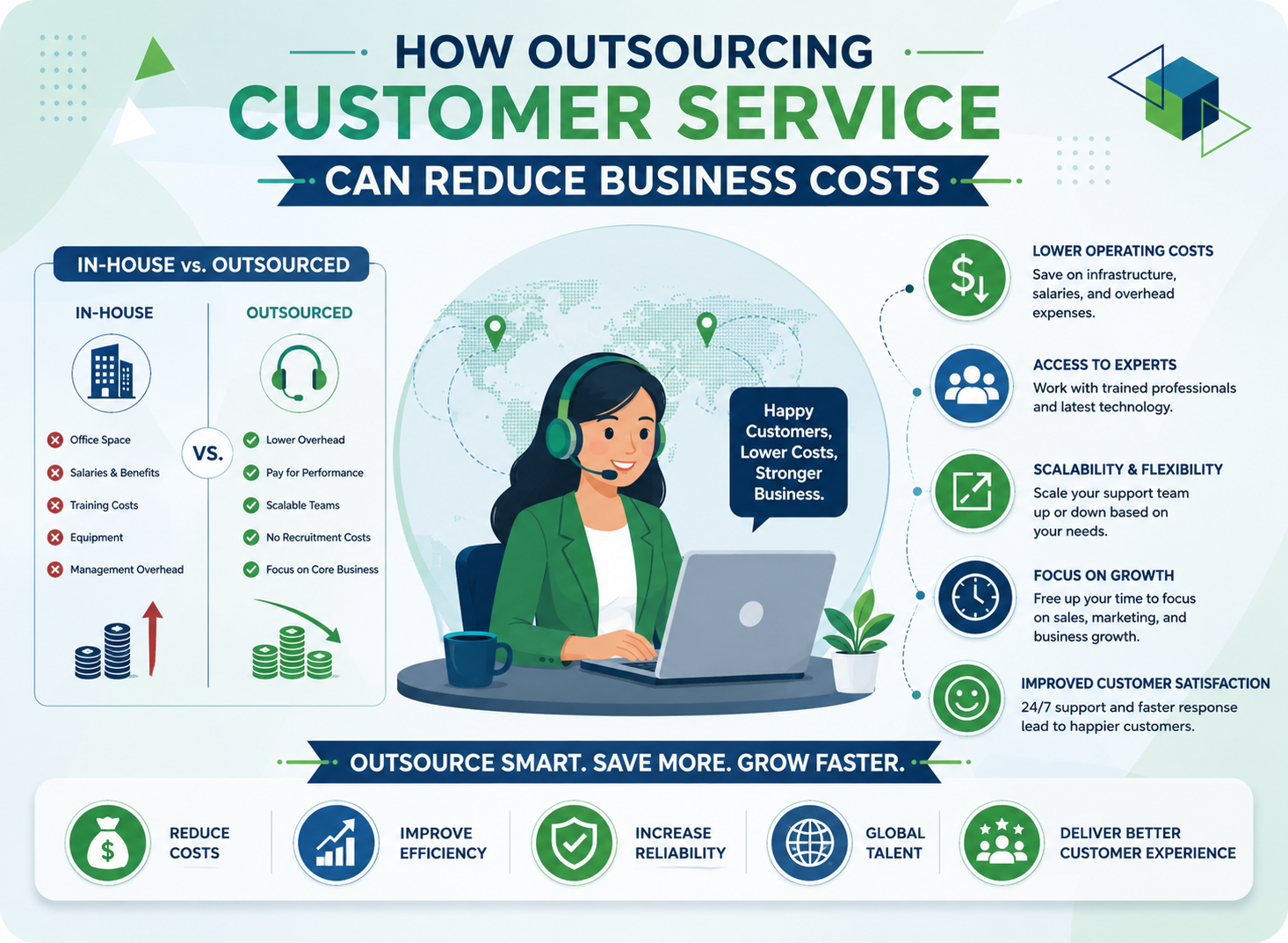
Support is one of the few departments that gets more expensive exactly when business is good. Orders climb, tickets climb faster, and suddenly you are paying overtime, recruiting in a hurry, or watching response times slide while customers post about it publicly. Most owners look at outsourcing only after that cycle has repeated a few times. The interesting part is that the savings rarely come from where people expect. It is not simply a lower hourly rate. It is the removal of fixed costs you have been carrying whether or not tickets came in. This guide breaks down where the money actually goes, what changes when you outsource, and how to tell if the numbers work for you.
Outsourced customer service reduces costs by replacing fixed salaries, recruitment, training, software licences and idle staff hours with support you pay for only when it is used.
Where Your Support Costs Really Sit
Ask a business what support costs and you usually hear the salary figure. That is often less than half of it.
You are also paying for recruitment and the weeks a role sits open, training time before an agent is productive, supervisor hours spent coaching, desk space and equipment, helpdesk and telephony licences, paid leave and sick cover, and the overtime that hits every seasonal peak. Then there is the quiet one: idle hours. If your ticket volume drops on Tuesday afternoons, you still pay for the seat.
The most expensive line of all is turnover. Support has high churn in most markets, and every departure restarts recruitment, training and the productivity ramp. Businesses that budget only for salaries are usually underestimating their real cost per resolved ticket by a wide margin.
How Customer Service Outsourcing Services Change the Maths
Customer service outsourcing converts most of those fixed costs into variable ones. You buy hours or coverage, and the provider carries the rest.
Recruitment becomes their problem. So does training, replacement when someone leaves, supervision, quality checks, equipment and in many cases the software stack. When your volume falls, you scale hours down instead of paying for empty seats. When a sale doubles your ticket count for ten days, you scale up without a hiring cycle that would have taken six weeks anyway.
There is a coverage saving too. Extending your own team to evenings, weekends or 24-hour cover means shift premiums and more headcount than the workload justifies. A provider spreads that cover across clients and time zones, so you get round-the-clock live chat without paying a night shift premium for hours where three messages arrive.
Which Costs Disappear First
Businesses that outsource tend to see savings in this order.
Overtime and temporary staff: the first thing to go, usually within the first busy period.
Recruitment and onboarding: no adverts, no interview panels, no four-week ramp on your payroll.
Software and equipment: helpdesk seats, phone systems and hardware move to the provider in most arrangements.
Supervision: team leads and QA time comes bundled rather than pulled from your existing managers.
Idle hours: you stop paying for coverage nobody used.
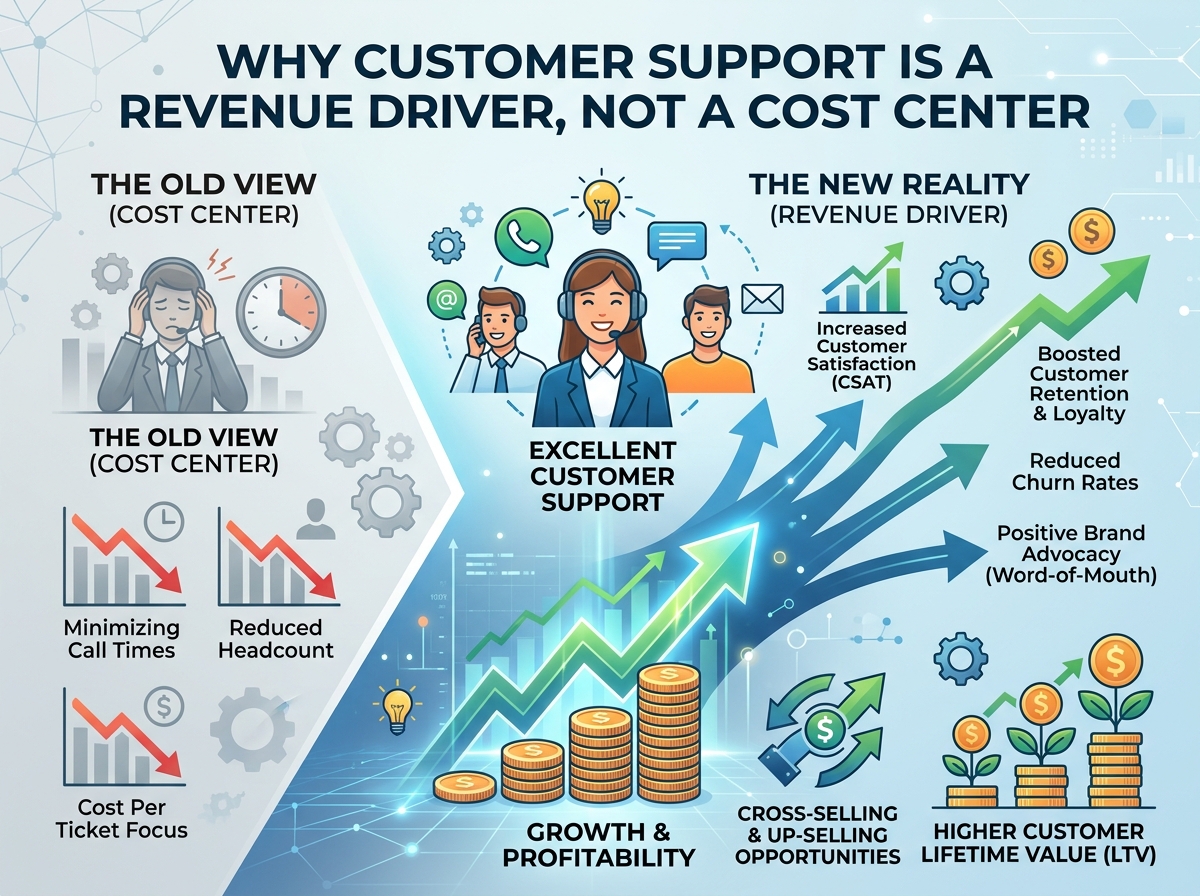
Underneath all of that sits the recovery cost. Slow replies lose sales and drive refund requests. Faster first response is a revenue effect, not just a service one, and it usually shows up in returning customer rate before it shows anywhere else.
Does Outsourcing Customer Support Hurt Quality?
This is the fear worth taking seriously, because badly run outsourcing does damage brands. The difference comes down to how the arrangement is set up.
Problems appear when a provider is handed a phone number and no context. Agents guess at policy, escalate everything, and customers repeat themselves three times. That is a briefing failure rather than a proof that outsourcing does not work.
Quality holds when the provider gets your product knowledge, your refund and shipping rules, access to the same tools your team uses, and a named person on your side who answers questions in a day. Ask for recorded calls or chat transcripts in the first month, agree what a good resolution looks like, and review a sample weekly. Providers who resist that level of scrutiny are telling you something useful.
What to Look For in a Support Partner
Start with fit rather than price. A provider used to enterprise phone queues may be wrong for a Shopify store that lives on Instagram DMs and email support.
Check which channels they cover and whether the same agents handle all of them, since split teams create inconsistent answers. Ask how many clients a single agent works across, because a shared agent will never learn your catalogue properly. Confirm reporting: first response time, resolution time, backlog and CSAT should arrive without you chasing. Check how they handle escalation to your team and how quickly they can add hours during a peak. Finally, confirm data handling, access control and confidentiality terms in writing before anything goes live.
If your support workload also spills into order updates, returns processing or listing fixes, a partner offering Shopify and e-commerce support alongside customer service saves you managing two vendors.
When Outsourcing Is Not the Cheaper Option
It is not always the right answer. If your support volume is genuinely low and handled in twenty minutes a day by someone already on payroll, outsourcing adds coordination work for very little saving. Highly technical support that requires deep product engineering knowledge usually stays in-house, at least for tier two. Businesses in the middle of rewriting their product or policies every fortnight will spend more time briefing than they save.
The clearest signal to outsource is repetition. When most of your tickets are the same twenty questions about delivery, sizing, returns, and order status, that work is documented easily and handed over cleanly. Keep the complex ten percent, delegate the rest.
How to Move Without Disrupting Customers
Do it in stages. Start with one channel, usually live chat or email, and one shift. Write down your top thirty questions with approved answers before day one. Give the provider real access to order systems rather than making them email your team for every lookup. Run parallel for two weeks with your own staff reviewing responses. Then expand channel by channel.
Track cost per resolved ticket before and after, not just the invoice. That single number tells you whether the change worked better than any other metric.
Key Takeaways
Salary is a minority of your true support cost once recruitment, training, turnover, software and idle hours are counted. Outsourced customer service turns those fixed costs into hours you pay for on demand. Quality depends on briefing, access and reporting rather than location. Start with one channel, measure cost per resolved ticket, and expand once the numbers hold.
If your support bill grows every time sales do, that is the problem worth fixing. Book a call with AcceleraOps and we will map your ticket volume to the right coverage.
What is outsourced customer service?
Support handled by an external provider who manages agents, training and tools while answering your customers on your behalf.
How does customer support outsourcing reduce costs?
It removes recruitment, training, software, supervision and idle hour costs, replacing fixed salaries with hours you actually use.
Will outsourcing slow down my response times?
No, response times usually improve, because providers run shift coverage and staff for peaks your in-house team cannot match.
Which channels can be outsourced?
Live chat, email, phone, social media messages and order-related queries can all be handled by an external support team.
Is outsourcing suitable for small businesses?
Yes, small teams benefit most, since they gain evening and weekend cover without hiring extra full-time staff.
Ready to put these insights into action?
Let’s build your outsourcing strategy together. Free consultation, no
obligation.