
What Does a Property Management Virtual Assistant Do?
Property management runs on small interruptions. A tenant messages about a leaking tap while you are showing a unit. An owner wants last month’s statement during a lease signing. Three applicants call about the same listing before lunch, and two of them will never answer their phone again. None of these tasks is difficult. Together they eat the day, and they are the reason most managers work evenings on paperwork they could have finished at 3 pm. A property management virtual assistant exists to absorb that layer. This guide covers exactly what they handle, what stays with you, and how to judge whether one fits your portfolio.
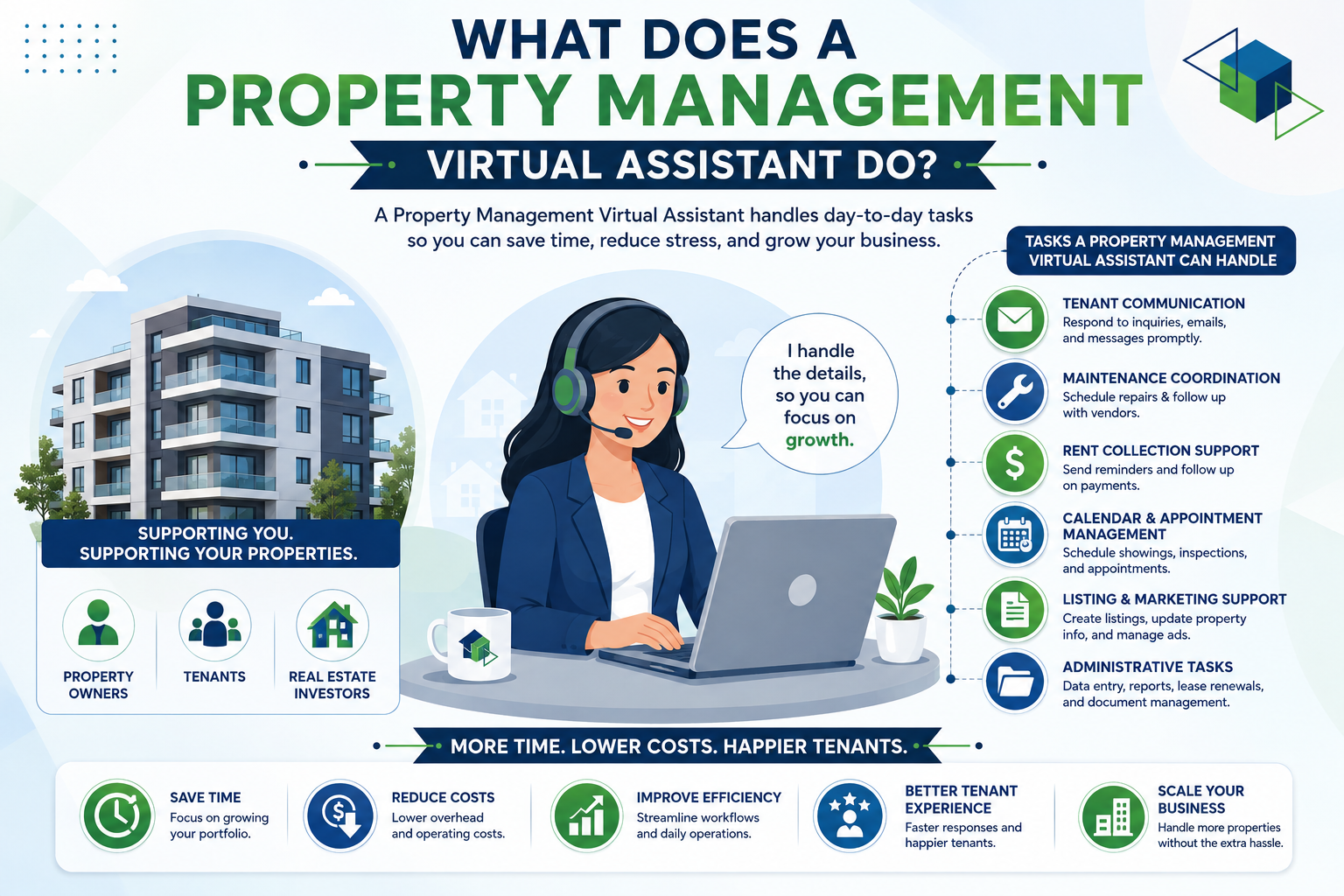
A property management virtual assistant handles tenant communication, maintenance coordination, listings, rent follow-ups, applicant screening, and owner reporting remotely, so managers focus on showings, negotiations, and growth.
The Daily Work a Property Management VA Takes Over
Most of the job sits in four areas: tenants, vendors, owners and paperwork.
On the tenant side, a VA answers calls, texts and emails, logs maintenance requests, sends rent reminders, follows up on late payments and books viewings. On the vendor side, they get quotes from plumbers and electricians, schedule the visit around tenant availability, confirm completion and file the invoice. For owners, they prepare monthly statements, chase missing documents and send updates before the owner has to ask. The paperwork layer covers lease drafting from your templates, renewal notices, move-in and move-out checklists, and keeping your management software current.
The pattern is consistent. Anything that needs a person, a system and a follow-up, but not your licence or your judgement, can move to a property management virtual assistant.
Tenant Communication and Maintenance Coordination
This is where the hours actually go, and where a VA changes the day most.
Maintenance is a coordination problem more than a repair problem. Someone has to take the report, judge urgency, contact the right vendor, match two calendars, notify the tenant, confirm the work happened and close the ticket. That chain runs five to eight touches per request. A VA runs it end to end and escalates only when cost passes your approval limit or the issue is an emergency.
Tenant communication works the same way. Fast replies prevent most complaints. When someone gets an acknowledgement within an hour, they stop calling every two hours. Providers running live chat and email support cover evenings and weekends too, which is when tenants actually notice problems.
Leasing, Listings and Applicant Screening
Vacancy is the most expensive thing in your business, so speed matters more than polish here.
A real estate virtual assistant writes and posts listings across your portals, refreshes them when they go stale, and answers the first wave of enquiries with a standard qualifying script. They filter out applicants who do not meet income, pet or move date criteria before anyone wastes a viewing slot. For those who pass, they collect documents, run reference and employment checks through your chosen provider, and hand you a shortlist with everything attached.
Once a tenant is chosen, the VA prepares the lease from your template, arranges signing, schedules the mo./ve-in inspection, and sets up the rent record. You approve. They execute.
Rent Collection, Records and Owner Reporting
Chasing rent is uncomfortable work that gets delayed, and delay makes it worse. A VA runs a fixed sequence: reminder before due date, notice on the day, follow up at three days, escalation to you at seven. Because it is systematic rather than emotional, arrears drop without anyone raising their voice.
Behind that sits record keeping. Rent received, expenses logged, invoices matched to properties, deposits tracked and documents filed against the right unit. Clean records are what make month-end reporting a thirty-minute job instead of a weekend. If your data has drifted across spreadsheets and inboxes, data entry and CRM support can rebuild it before the ongoing work starts.
Owner reporting is the visible output. Monthly statements, maintenance summaries, occupancy figures, and a short note on anything the owner should know. Owners who receive that without asking renew their management agreements. That alone often covers the cost of the role.
What a Property Management VA Cannot Do
Worth being clear, because misunderstanding this creates real problems.
A VA cannot carry out licensed activity where your jurisdiction requires it, cannot sign leases in your name unless you have granted that authority properly, and cannot make judgement calls on evictions, legal notices or major spend. They do not attend property in person, so inspections, key handovers and emergency site visits stay local. They also should not be setting policy on pricing, tenant selection criteria or dispute outcomes. Those are yours.
Think of the split this way. The VA handles the process. You handle the decisions and anything requiring feet on the ground.
How Many Properties Can One VA Handle?
It depends on portfolio type more than count. Single-family homes spread across a city generate more coordination per unit than a single apartment block. Short-term rentals generate several times the messaging volume of annual leases. Older stock produces more maintenance tickets than new build.
As a rough guide, one full-time assistant supports a mid-sized portfolio of standard long-term rentals comfortably, while a part-time arrangement suits smaller landlords with under thirty units. The better approach is to count tasks rather than doors. Track one normal week, total the hours spent on the work listed above, and hire against that number with a little room for peaks.
Setting One Up Properly
Give access on day one to your management software, listing portals, shared inbox and vendor contact list. Record short screen videos of your five most repeated processes instead of writing manuals. Set spend approval limits in writing so the assistant knows when to act and when to ask. Agree an escalation rule for emergencies, including out-of-hours contact. Then start with maintenance coordination and tenant messaging, since those free the most time fastest, and add leasing once quality is proven.
Expect about a month before the assistant works independently. Weekly fifteen-minute check-ins during that period prevent nearly every problem people blame on outsourcing later.
Key Takeaways
A property management VA handles tenant communication, maintenance coordination, listings, screening, rent follow-ups, and owner reporting from a remote seat. Licensed work, site visits, and judgement calls stay with you. The biggest wins are faster maintenance turnaround, lower arrears, and vacancies filled sooner. Scope the role by weekly task hours, not by door count.
If admin is holding your portfolio back, hand it over. Book a call with AcceleraOps, and we will map which tasks to delegate first.
What is a property management virtual assistant?
A remote assistant who handles tenant communication, maintenance scheduling, listings, rent follow-ups, and owner reporting for property managers.
Can a property management VA collect rent?
They send reminders, chase arrears and record payments, but funds move through your own approved payment systems.
Do property management VAs handle maintenance requests?
Yes, they log requests, get vendor quotes, schedule visits, notify tenants and confirm completion before closing each ticket.
How much property management work can be outsourced?
Most administrative and coordination work, typically sixty to seventy percent of daily tasks, excluding licensed duties and site visits.
Is a real estate virtual assistant worth it for small landlords?
Yes, part-time support suits smaller portfolios and usually costs less than one avoidable week of vacancy.



Ready to put these insights into action?
Let’s build your outsourcing strategy together. Free consultation, no
obligation.