How to Document Standard Operating Procedures Before Outsourcing Business Tasks
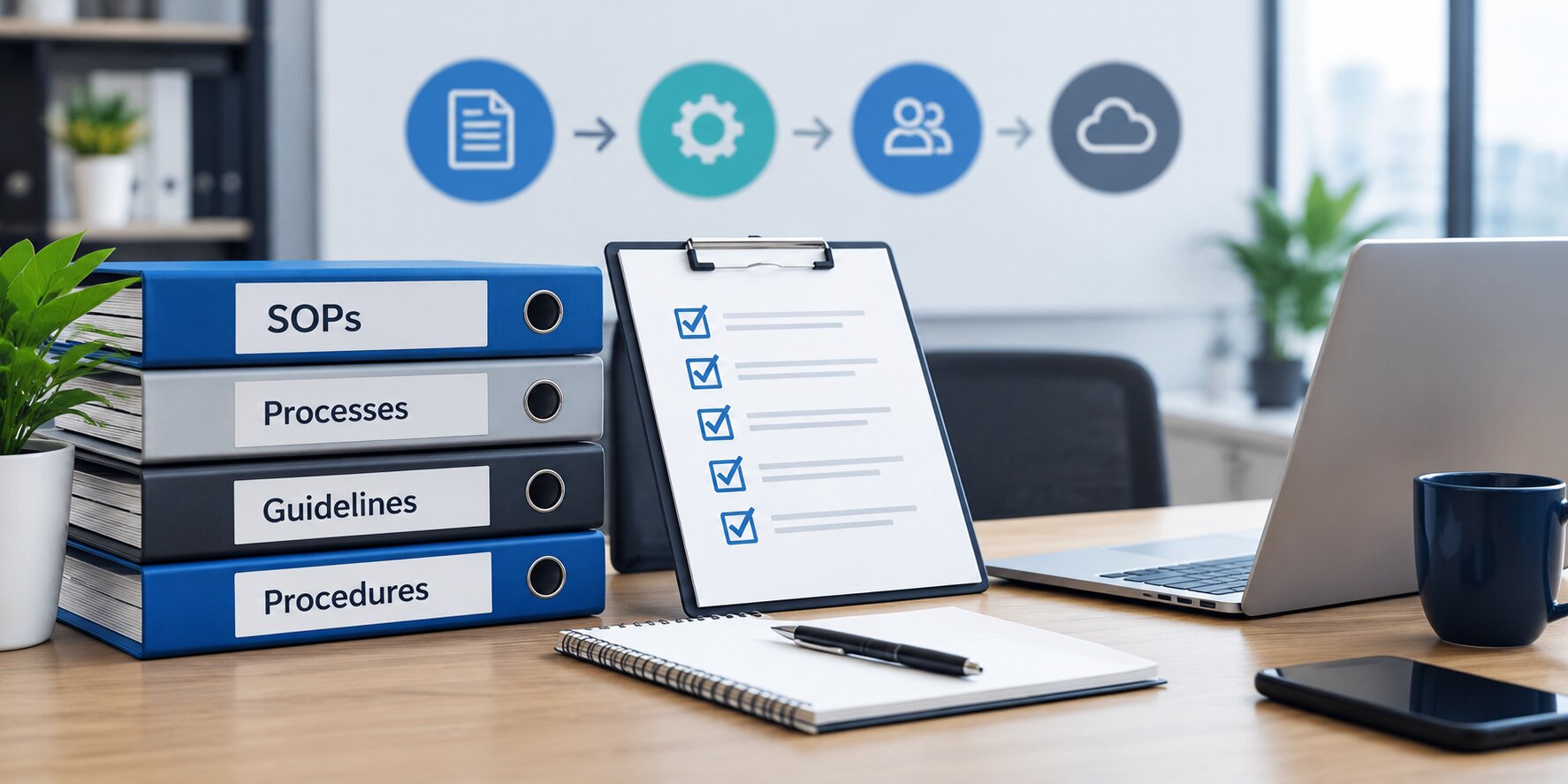
Outsourcing business tasks can help companies save time, reduce administrative pressure, and focus on growth. However, hiring a virtual assistant or outsourcing provider does not automatically make operations more efficient. Without clear instructions, even experienced professionals may struggle to understand your expectations, follow internal processes, or deliver consistent results.
The solution is effective standard operating procedures (SOPs). These documents explain how recurring tasks should be completed, which tools to use, and what standards the final work must meet.
For U.S. businesses preparing to delegate administrative, customer service, marketing, or operational responsibilities, SOPs for outsourcing create a reliable foundation for successful collaboration. This guide explains how to document business processes before outsourcing and prepare your team for a smoother transition.
What Are SOPs for Outsourcing?
Standard operating procedures are written instructions that describe the steps required to complete a specific business task. They define responsibilities, tools, workflows, quality requirements, and procedures for handling common problems.
For example, an SOP for customer support might explain how to respond to inquiries, update customer records, use approved response templates, and escalate complicated requests.
Similarly, an administrative SOP could outline how to organize files, schedule appointments, or prepare weekly reports.
Effective SOPs help outsourced professionals understand what to do, how to do it, and when to request assistance.
Why Is Business Process Documentation Important Before Outsourcing?
Business process documentation transforms informal knowledge into repeatable instructions that employees and external service providers can follow.
Without documentation, business owners often spend valuable time explaining the same tasks repeatedly, correcting errors, and monitoring routine activities.
Creating SOPs before outsourcing offers several benefits:
- Consistent quality: Every team member follows the same approved process.
- Faster onboarding: New virtual assistants can learn responsibilities more efficiently.
- Fewer misunderstandings: Clear instructions establish expectations and deadlines.
- Reduced management workload: Employees can find answers without constantly contacting supervisors.
- Easier scalability: Documented processes make it simpler to delegate additional tasks as the business grows.
For growing companies, these benefits help turn outsourcing into a structured business strategy rather than an ongoing management challenge.
How to Document Standard Operating Procedures Before Outsourcing
1. Identify Tasks Suitable for Outsourcing
Begin by listing recurring tasks that consume time but do not require your direct involvement in every decision.
Common examples include email management, appointment scheduling, data entry, customer support, CRM updates, social media scheduling, and report preparation.
Prioritize tasks that are repetitive, time-consuming, and relatively easy to standardize. Consider how frequently each task occurs, the consequences of mistakes, and the amount of time it takes to complete.
Before delegating sensitive or high-risk responsibilities, establish appropriate approval procedures, confidentiality requirements, and access restrictions.
2. Record the Existing Workflow
Before writing an SOP, observe how the task is currently performed. Document each action, the tools involved, the information required, and the decisions made along the way.
For example, an invoice-processing workflow might include receiving an invoice, verifying supplier information, checking the amount, entering the details into accounting software, and forwarding the invoice for approval.
Capture common exceptions as well, such as missing information or duplicate records.
Screen recordings can help explain software-based tasks, while written notes provide a searchable reference. Combining both formats makes outsourcing workflow documentation easier to understand and follow.
3. Use a Standard SOP Template
A consistent template keeps documentation organized and makes procedures easier to maintain.
Each SOP should include:
- Task name and purpose: What the procedure accomplishes.
- Scope and responsibilities: Who performs the task and when it applies.
- Required tools: Software, templates, and resources needed.
- Step-by-step instructions: The correct sequence of actions.
- Quality checklist: Requirements for successful completion.
- Exception handling: What to do when something goes wrong.
- Escalation process: Who to contact for assistance or approval.
- Document ownership: The responsible person, version number, and review date.
Keep each SOP focused on one process. Short, clearly organized instructions are generally more useful than lengthy manuals covering several unrelated tasks.
4. Write Clear Instructions for Virtual Assistants
One of the most common outsourcing mistakes is assuming that external team members already understand your company’s internal practices.
Effective standard operating procedures for virtual assistants should use simple language, numbered steps, and specific instructions.
For example, instead of writing, “Update the CRM regularly,” explain exactly which records need updating, which fields are required, and when the update must be completed.
Include communication guidelines, task priorities, deadlines, approved templates, and reporting expectations. Specify which decisions the assistant can make independently and which require manager approval.
Screenshots and examples can be particularly helpful when a task involves several software platforms.
5. Document Exceptions and Quality Standards
Not every task follows the same path. Your SOP should explain how to handle missing information, system errors, customer complaints, and requests outside established policies.
For each common exception, identify the situation, the appropriate next step, and the person responsible for resolving it.
Define what successful completion looks like, too. For instance, a lead-generation task might require verified contact details, a company name, a reliable source, and a documented next action.
Measurable standards make it easier to review performance, identify recurring problems, and improve processes over time.
6. Test the SOP Before Delegating the Task
A document may appear complete while still leaving important questions unanswered.
Ask someone unfamiliar with the process to follow the instructions using a realistic example. Observe where they hesitate, misunderstand a step, or need additional information.
Use their feedback to correct unclear instructions and fill in missing details.
For more complex workflows, begin with a controlled trial and review the initial results before transferring full responsibility.
Testing helps ensure that the SOP works in real business conditions rather than simply describing how the process should work in theory.
7. Organize and Update Your Documentation
Store approved SOPs in a centralized, secure location that authorized team members can access easily. Tools such as Google Drive and Notion can help businesses organize procedures by department or task.
Assign an owner to each document and maintain version history so employees know which instructions are current.
Review SOPs whenever software, responsibilities, or company policies change. Regular reviews and feedback from outsourced professionals can reveal opportunities to simplify workflows and prevent repeated errors.
Remember that effective documentation is an ongoing process, not a one-time administrative task.
Common Mistakes to Avoid When Preparing SOPs
Businesses can undermine their outsourcing efforts by creating documentation that is too complicated, vague, or outdated.
Avoid these common mistakes:
- Writing lengthy instructions that are difficult to navigate.
- Leaving out exceptions and escalation procedures.
- Using unclear language such as “handle appropriately.”
- Sharing unnecessary access to confidential business information.
- Skipping testing and employee feedback.
- Failing to update procedures after process changes.
The goal is to provide enough detail for consistent execution while making it clear when human judgment or managerial approval is necessary.
How AcceleraOps Supports Smarter Outsourcing
Successful outsourcing requires more than transferring responsibilities. It depends on clear workflows, effective communication, structured onboarding, and measurable expectations.
AcceleraOps helps businesses explore outsourcing and virtual assistant solutions that support operational efficiency. Preparing documented processes before delegation can help establish clearer responsibilities, smoother knowledge transfer, and more consistent results.
Start by identifying repetitive tasks, documenting their workflows, and setting clear quality standards. With the right preparation, businesses can delegate more confidently while keeping essential processes organized.
Explore the available solutions at AcceleraOps to learn more about supporting your business operations.
Frequently Asked Questions
What should an SOP include before outsourcing a business task?
An SOP should include the task’s purpose, responsible person, required tools, step-by-step instructions, quality standards, exception-handling procedures, escalation contacts, and review date.
Why are SOPs important for outsourcing?
SOPs reduce miscommunication, improve consistency, simplify onboarding, and help outsourced professionals complete tasks with less supervision. They also make performance easier to measure.
How do you create standard operating procedures for virtual assistants?
Identify recurring responsibilities, record the current workflow, write clear instructions, define deadlines and quality standards, and explain when the assistant should request approval. Test the instructions before delegating the task fully.
What is outsourcing workflow documentation?
Outsourcing workflow documentation describes how a business task moves from initiation to completion. It includes the steps, responsibilities, tools, decision points, handoffs, and expected outcomes needed for consistent execution.
Which tasks should businesses document first?
Start with frequently repeated tasks such as email management, customer support, data entry, scheduling, CRM updates, and reporting. Prioritize tasks that consume significant time or depend heavily on one employee’s knowledge.
How often should SOPs be updated?
Review SOPs whenever a process, tool, policy, or responsibility changes. Periodic reviews and feedback from outsourced team members also help keep instructions accurate and useful.
Can small businesses benefit from SOPs for outsourcing?
Yes. Small businesses can use SOPs to delegate routine responsibilities, reduce repeated explanations, improve consistency, and prepare for growth without relying entirely on the business owner’s personal involvement.
Recent Post
-
 What Tasks Can an Executive VA Handle for a Growing Business?30 Oct 2026
-
 How a Virtual Assistant Can Help a Small Business Manage Cash Flow Records26 Oct 2026
-
 How to Handle E-commerce Returns and Refund Requests at Scale23 Oct 2026
-
How to Document Standard Operating Procedures Before Outsourcing Business Tasks22 Oct 2026
-
 What Is CRM Data Enrichment and Why Does It Matter?28 Sep 2026
Ready to put these insights into action?
Let’s build your outsourcing strategy together. Free consultation, no
obligation.