
What Is CRM Data Enrichment and Why Does It Matter?
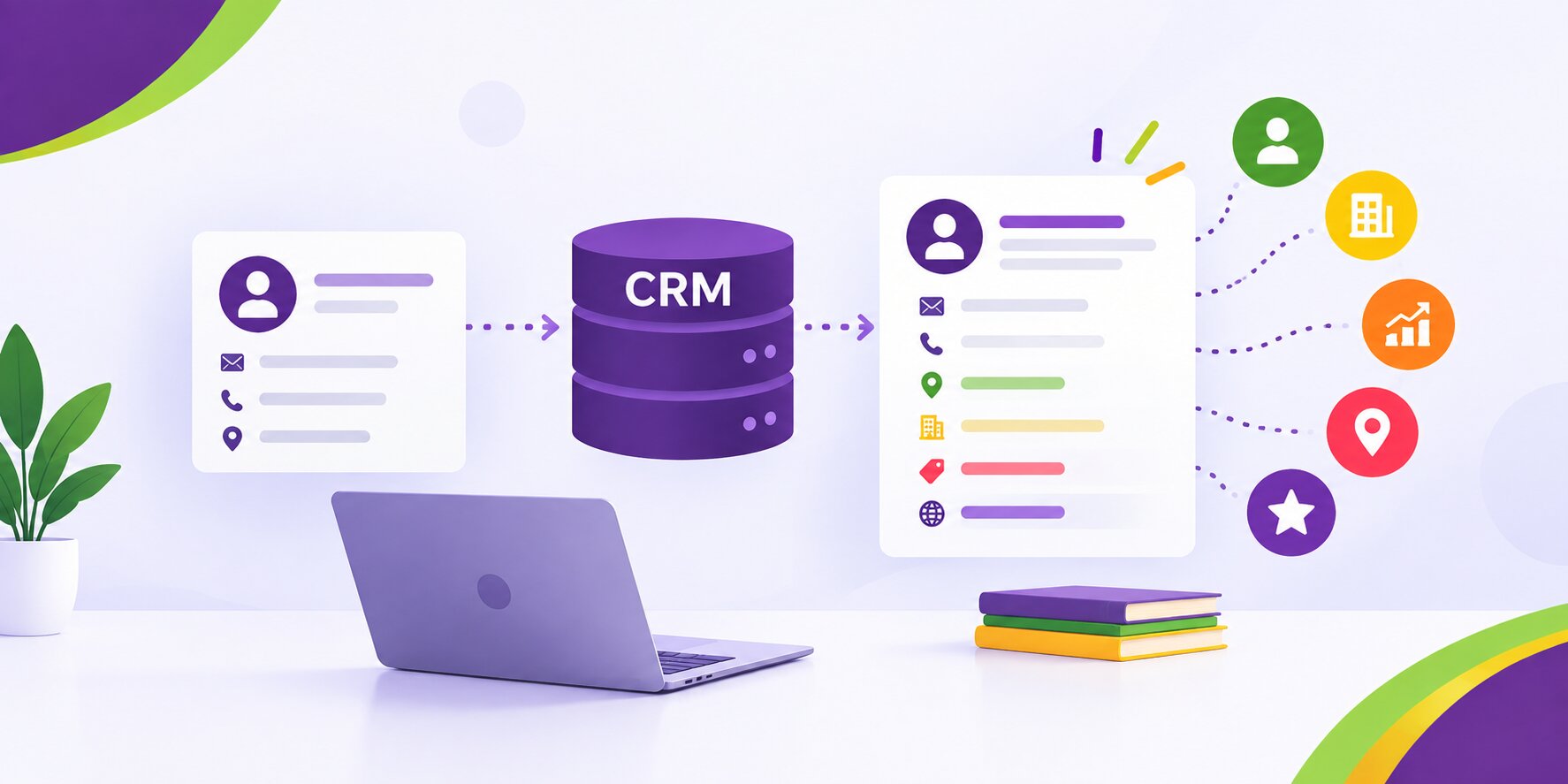
Your CRM is probably lying to you a little. Not on purpose, but half the contacts in there have outdated job titles, missing phone numbers, or emails that bounce the second someone hits send. Nobody added that information on purpose, it just decayed over time while nobody was watching. That’s the gap CRM data enrichment is built to close.
It’s not a glamorous fix. Nobody gets excited about cleaning up a database. But the businesses actually hitting their sales numbers are usually the ones who took this seriously before it became a problem, not after a quarter of wasted outreach made it obvious.
What CRM Data Enrichment Actually Means
Strip away the jargon and it’s simple: taking the contact records you already have and filling in what’s missing or wrong. A lead with just a name and email gets a job title, company size, industry, phone number, and social profile added. A record untouched for two years gets checked and corrected if the person has moved on or changed roles.
Most businesses collect basic information at the point of contact, a form fill, a trade show scan, a cold inbound email, and never go back to fill in the rest. CRM data enrichment services exist to close that gap, pulling from verified external sources rather than guesswork or manual research nobody has time for.
Why This Actually Matters to Your Bottom Line
A sales rep calling a number that’s three years out of date isn’t just wasting five minutes. They’re wasting five minutes multiplied by every contact on a stale list, which adds up to hours every single week spent chasing people who’ve either left the company or never existed in the first place.
Bad data doesn’t just slow things down, it actively misleads decisions. Marketing segments campaigns based on job titles that are wrong. Sales prioritizes leads based on company size figures that haven’t been accurate since before the pandemic. Every decision built on top of dirty data inherits that dirt, whether anyone notices or not.
The Real CRM Data Enrichment Benefits
Better targeting is the obvious one. When your CRM actually knows a contact’s role, industry, and company size, campaigns and outreach get built around who these people actually are, not who they were two years ago.
Faster sales cycles follow close behind. Reps stop wasting calls on disconnected numbers and bounced emails, and start spending that time on people who are actually reachable and relevant. That alone tends to shift close rates in a way that’s hard to ignore once you see the numbers side by side.
There’s also the reporting angle, which gets overlooked more than it should. Leadership makes decisions based on what the CRM says is happening. If the underlying data’s wrong, the strategy built on top of it is wrong too, sometimes for months before anyone traces the problem back to its source.
What Good Enrichment Actually Looks Like
It’s not a one-time cleanup and done. Contacts change jobs, companies get acquired, phone numbers get reassigned. A record that was accurate in January can be stale by June without anyone doing anything wrong, it’s just how databases age.
Proper CRM data enrichment runs on a schedule, checking and updating records regularly rather than waiting for someone to notice a bounce rate creeping up. Some businesses handle this with automated tools that pull from verified data sources. Others bring in a team to manage it manually, particularly when the CRM holds sensitive or highly specific B2B data that automated tools tend to get wrong.
Who Actually Needs This
Any business running outbound sales or marketing off a CRM benefits from this, but it matters most for teams with lists that have been sitting untouched for a while, or ones that pull in a high volume of new contacts through forms and lead generation without ever following up to verify what came in.
If your team’s complaining about bounce rates, or sales keeps saying half the leads marketing hands over aren’t real, that’s usually a data quality problem wearing a different name. CRM data enrichment services are built exactly for this situation, cleaning up what’s already there instead of just adding more unreliable contacts on top of a shaky foundation.
Getting Started Without Overhauling Everything
Don’t try to enrich the whole database at once. Start with the segment that matters most right now, active leads in your current pipeline, or accounts your sales team is actively working. Get those clean and accurate first, then expand outward once you’ve seen how much it actually changes response rates and close velocity.
The mistake most businesses make is treating this as a one off project instead of an ongoing habit. A CRM without a regular enrichment process just drifts back into the same mess a year later, and the whole cleanup has to happen again from scratch.
Clean data isn’t exciting, but it’s the difference between a sales team working efficiently and one quietly burning hours on contacts that were never going to convert. Fix the foundation first, and everything built on top of it works better.
Frequently Asked Questions
What is CRM data enrichment?
The process of adding missing details and correcting outdated information in your CRM contacts, using verified external data sources.
Why does CRM data enrichment matter for sales teams?
It stops reps wasting time on disconnected numbers and inaccurate leads, improving both close rates and overall efficiency.
How often should CRM data be enriched?
Regularly, not just once. Contacts change jobs and companies often, so records go stale within months without updates.
What are the main CRM data enrichment benefits?
Better targeting, faster sales cycles, and more accurate reporting, since decisions rely on data that actually reflects reality.
Do small businesses need CRM data enrichment services?
Yes, especially if lead lists are large or untouched for a while. Bad data affects businesses of every size.
Recent Post
-
What Is CRM Data Enrichment and Why Does It Matter?28 Sep 2026
-
 Virtual Assistant vs In-House Employee: Which Is Better for Your Business?24 Sep 2026
 -
 What Tasks Can You Outsource to a Shopify Virtual Assistant?23 Sep 2026
 -
 How an Executive Virtual Assistant Can Save Business Owners Time23 Sep 2026
 -
 How Virtual Assistants Can Help Build Your Sales Pipeline24 Aug 2026
Ready to put these insights into action?
Let’s build your outsourcing strategy together. Free consultation, no
obligation.